
Time Is of the Essence: How the Market Reads Your Listing in the First 60 Days

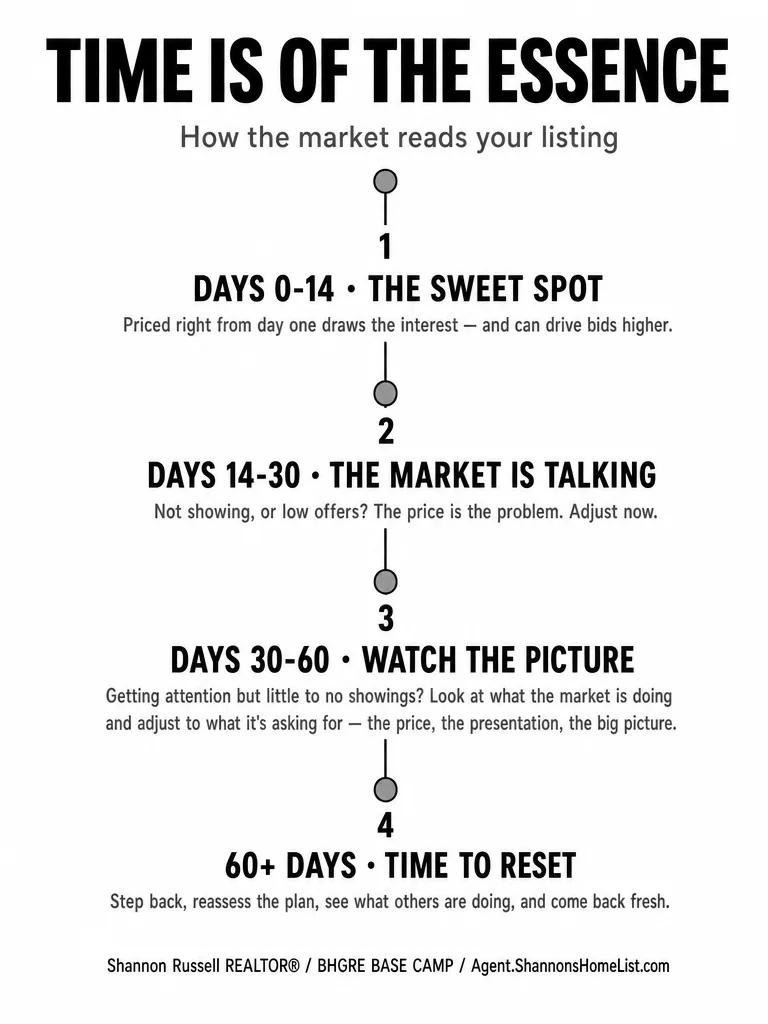
The first 60 days of a listing tell the market a story. Every phase has a job, and every signal is useful.
In real estate, "time is of the essence" applies to both sides of the table, and not just in the fine print. Buyers are always on a clock: closing dates, rate locks, lease expirations, school calendars, PCS orders. Sellers are on a clock too, because the market literally reads your listing by the calendar. Every day a home sits on the market is information that buyers and their agents quietly collect, and the story it tells changes as the days add up. And it is never just about price: how a home presents is just as important, and the market reads the two together from the very first photo.
I have priced and listed homes all across the Richmond and Hampton Roads area, from Henrico to New Kent to West Point, and the pattern is remarkably consistent. The first 60 days are not random. They follow a rhythm, and every listing speaks that rhythm out loud whether we want it to or not. This is the framework I walk my sellers through, so no price is ever a guess and no signal gets ignored.
Days 0-14: The Sweet Spot
The first two weeks decide whether your home is priced right. This is the window when your listing gets the most eyes it will ever get: the new-list alerts, the email blasts, the agents who have buyers waiting for something fresh to hit the market. A home that debuts in the sweet spot shows up in every search, draws interest from real buyers, and gives the market a chance to do something wonderful: bid higher.
The sweet spot is not a hopeful number. It is the price that aligns with what buyers are actually willing to pay for a home like yours, in your neighborhood, right now. When the price matches the comps and the market's mood, showings book fast, and competing buyers can push your final number above asking. That is what day one through day fourteen is for: prove the price is right by letting buyers vote with their feet.
Days 14-30: The Market Is Talking
If buyers are not showing up, or the offers that come in are lower than you hoped, that is not bad luck. It is information. The market is telling you the price is not right, and the sooner you hear it, the more time your listing has to recover. I know it can sting, but the market is never wrong about price, and the sellers who accept that early are the ones who protect their bottom line.
This is the moment to address it head-on and adjust accordingly. A price adjustment at the two-week mark still reads to buyers as responsive and sharp, not desperate. And do not stop there: keep making changes going forward. Adjusting the price, refreshing the photos, reworking the description, or opening up showing times are all ways to keep the listing moving while the market is talking.
Days 30-60: Watch the Overall Picture
Getting attention but little to no showings? Look at what the market is doing and adjust to what it's asking for: the price, the presentation, the big picture.
60+ Days: Time to Reset
Step back, reassess the plan, see what others are doing, and come back fresh.
Price Isn't Everything: How Your Home Presents
Here is the honest truth I share with every seller: buyers are not buying your life. They are buying their next life, and they need to see themselves living in your home, not you and your family. Your family photos, the art on the fridge, the closets full of stuff, all of it is wonderful, but it asks a buyer to imagine someone else's life before they can picture their own.
That is why presentation matters so much to this clock. A few dark pictures, a cluttered room, or a tired exterior can stall the momentum that good pricing built in the first thirty days. Buyers who walk in and have to mentally declutter, redecorate, and deep clean all at once are buyers who hesitate, and hesitation is how days on market climb.
Here is the thing to remember: a couple of things about a home can't be changed, its location and what's going on around it. So the one thing you truly control is how the home presents cosmetically. That's why dressing up what you can matters so much: decluttering, deep cleaning, staging, curb appeal, and bright photos that show every room. It's the lever that's fully in your hands, and it works together with pricing to make buyers see themselves living there.
The good news is that this part is very much in your control. Decluttering, deep cleaning, staging the furniture you already own, boosting the curb appeal, and making sure the photos show every room bright and well-lit: all of it helps a buyer picture their life there. You do not need a magazine house, you need a home that says welcome, cared for, and ready.
Think of it as a partnership. I bring the pricing, the positioning, the marketing, and the market signals, and presentation is your side of the deal: showing the home at its best. And it is never too late to dress the house up. Even a listing that has been live for a while can get a second wind when the photos are refreshed after a good clean and a little staging, because the home finally looks like somewhere a buyer wants to be.
Why Doesn't My House Sell? The Complete Checklist
Price gets the blame the fastest, but it is rarely the whole story. When a home sits even at a fair price, the reasons usually live in a handful of places buyers vote on every single day. Here is the full checklist I walk sellers through when a listing is not getting the traction it should.
Professional photos and a video tour are the first impression. Most buyers never walk through your front door until they have scrolled past your photos. Bright, professional photos and a video tour are the first impression, and dark or phone-quality photos stop the scroll cold. If the listing does not look like a place buyers want to be, they may never click, never book the showing, and never give the price a chance.
The small details buyers notice. Buyers pick up the small details even when they cannot name them: smells, pet odors, cluttered closets, dated light fixtures and hardware. Fresh paint, updated fixtures, and fresh hardware are small fixes with a big payoff, because they tell buyers the home has been cared for. You do not need a renovation, you need the details to say ready.
Minor repairs read as neglect. A dripping faucet or a cracked tile sounds small, but left visible at a showing it reads as neglect, even at a fair price. Buyers start wondering what else was skipped, and that doubt shows up as a lower offer or no offer at all. Fixing the visible stuff before you list is cheaper than the discount buyers will imagine.
Is the home actually easy to show? Hard-to-access showings get skipped. If buyers can only see the home in narrow windows, need lots of notice, or struggle with the lockbox, agents quietly move on to the house down the street. Showing access is part of the product: generous windows and easy entry keep your home in the rotation.
Marketing exposure: how many people actually saw it? The right price and a beautiful home only work if buyers actually see them. Look at the numbers: how many views did the listing get, how many saves, how many showings, and through which channels? MLS placement, the portals, social media, and the agent network all feed that total. A listing nobody saw did not fail on price, it failed on reach.
A pre-listing inspection heads off surprises. A buyer's inspection can sink a negotiation after the price is already agreed, when surprises surface late. A pre-listing inspection lets you find the issues first, fix them or price for them, and disclose them honestly. Sellers who know their own house negotiate from strength instead of reacting from surprise.
Pricing and presentation work together, and so do all of these. If you want to know which one is stalling your listing, the data will tell us: showings, views, feedback, and days on market are all signals we can read together.
The thing I want every seller to know is this: pricing is not a guess, and it is not an argument with the market. It is listening. The market talks in showings, offers, views, and days on market, and every one of those signals is usable information. I guide sellers through every signal, from the first weekend to the reset, so the home sells for top dollar and the process feels steady, not overwhelming. If you are thinking about selling, let us talk about pricing before the sign goes in the yard.
Let us price it with the market.
I will pull the comps, walk through your home, and show you exactly how the market is likely to read your listing. A clear pricing plan keeps you in control from day one.
Shannon Russell is a licensed Virginia Realtor®, Military Relocation Professional (MRP), and 2025 Better Homes and Gardens Real Estate Silver Award recipient, serving Richmond, Henrico, Chesterfield, Hanover, New Kent, Charles City, West Point, James City, Newport News, Mechanicsville, King William, Prince George, Petersburg, Hopewell, Amelia, Goochland, and all surrounding areas.
Read the Buyer Side of the Clock
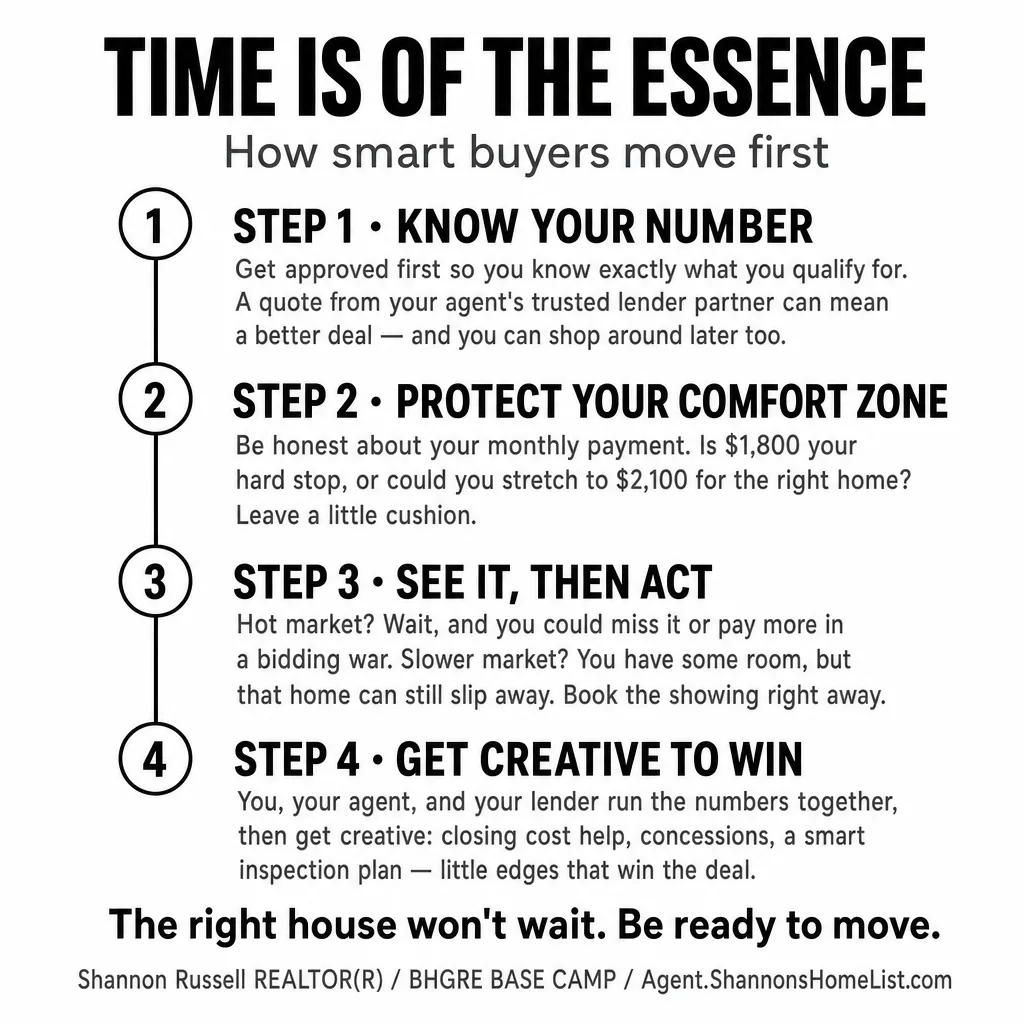
Time Is of the Essence: How Smart Buyers Move First
The buyer-side companion: know your number, protect your comfort zone, see it then act, and get creative to win.