
Be Ready, Not Scared: What to Keep at Home in Case of a Nuclear Threat, Severe Weather, or Power Outage

Nobody likes to think about worst-case scenarios. But practical preparation is one of the calmest things you can do for your family. A hurricane, an ice storm, a power outage that drags into day four, or something completely out of our control: the right supplies and a simple plan turn panic into a to-do list. This isn't doomsday thinking. It's being a prepared homeowner.
One Kit for Almost Anything
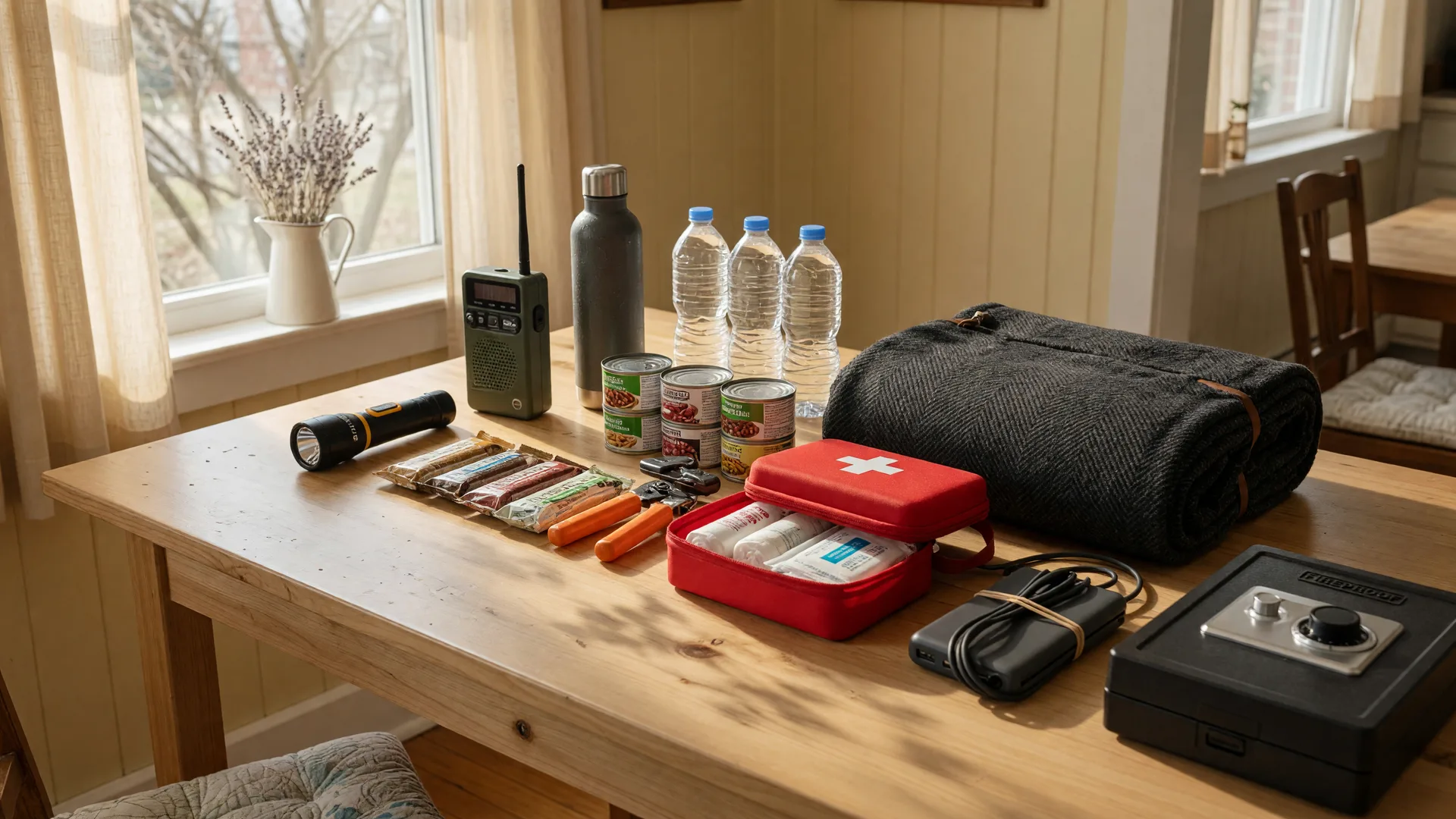
Federal officials don't recommend a different kit for every disaster. FEMA, the CDC and Ready.gov all point to one core emergency kit that works for severe weather, power loss and just about any other situation. Build it once, check it twice a year.
The Supplies
1. Water
One gallon per person per day, at least a 3-day supply and ideally working toward two weeks. Extra for pets and anyone with medical needs. Have a well? As long as you have power to run the pump, you've got water, but not everyone has a well or a generator. And in any contamination event, well water isn't automatically safe. Sealed bottled water is the safest option, the CDC notes. Stock up a little each grocery run and it adds up fast.
2. Food
Three days of non-perishables: canned goods, protein bars, peanut butter, dried fruit, plus a manual can opener. Canned food lasts for years in a cool, dark pantry if cans stay undamaged. The trick is rotating: use the old, replace with new.
3. Light and Power
Flashlights with extra batteries, a battery-powered or hand-crank NOAA weather radio, phone power banks, and a car charger.
4. Medications and Health
A 7-day supply of medications, copies of prescriptions, a first aid kit, extra glasses, baby and pet supplies.
5. Documents and Valuables
IDs, insurance policies, deed or lease, emergency contacts, stored in a waterproof, fire-resistant lockbox or safe. Paper can survive when power and the internet can't.
6. Cash and Contacts
Small bills, since ATMs and card readers can go down. Have one out-of-town relative everyone agrees to text.
7. Comfort and Extras
Blankets, sturdy shoes, a whistle, multi-tool, duct tape, hand sanitizer, wet wipes, garbage bags.
8. Firewood
If you heat with a wood stove or fireplace, keep a dry, seasoned supply of firewood stored covered and off the ground, enough for several cold days. Have the chimney cleaned every year and keep a fire extinguisher nearby. Never burn anything indoors without proper ventilation.
9. Warmth and emergency blankets
Keep a wool blanket or sleeping bag for each person. Mylar or reflective emergency blankets trap body heat but don't breathe: moisture from your body condenses on them and can leave you damp, and in extreme cold damp makes you lose heat faster. If you use a reflective blanket, put it over wool layers as an outer shell, not against your skin, and do what you can to stay dry.
How Long Does It All Last?
Water: rotate every six months. Food: check dates and use your stock. Meds: swap in fresh ones as you refill. Batteries and smoke detectors: test at each daylight saving time change, a built-in reminder.
What to Do When Something Happens
The core advice is simple: get inside, stay inside, stay tuned. Shelter in an interior room or basement, close doors and windows, grab your kit, listen for instructions.
During a power outage
Keep the fridge and freezer closed. An unopened fridge holds food safely about 4 hours, a full freezer about 48. Never run a generator indoors or in a garage. Check on neighbors.
What to Do in a Rare, Large-Scale Event
If officials ever issue a warning, don't guess, follow them. The habit is the same as any emergency: get inside, stay inside, stay tuned. Shelter in an interior room or basement, close doors and windows, grab your kit. If you were outside, remove your outer layer and shower once you're inside. Only take potassium iodide if officials specifically direct you to. The supplies above are the same ones you'd rely on.
Where Do I Go, Who Do I Talk To?
Sign up for your county's alert system and keep a NOAA radio. For shelters and help, the American Red Cross and the Virginia Department of Emergency Management (vdem.virginia.gov) are your go-tos. Call 911 for emergencies, 211 for non-emergency needs like food, shelter or utilities.
You don't need a bunker. You need a kit, a plan, and the peace of mind that comes from knowing your home is ready. That's a good feeling.
Thinking about making a move? Text Shannon at 804-803-1080.
Let's Talk About Your Home
Whether you are a first-time buyer, a military family relocating to Virginia, or a seller getting your home ready for the market, text me at 804-803-1080 or grab a time with me here, and let's make a plan together.
Shannon Russell REALTOR®, BHGRE Base Camp, Agent.ShannonsHomeList.com
Shannon Russell
Military Relocation Professional (MRP) & Realtor®
Shannon helps families across Richmond and Hampton Roads feel at home in Virginia, from first-time buyers to military relocations and sellers getting ready for the market. She brings warmth, honesty, and deep local knowledge to every client relationship.
Text Shannon at (804) 803-1080