Buying Land in Virginia: What Home Buyers and Builders Need to Know

"I work with families who want to buy land and build their dream home in places like New Kent, Hanover, Goochland, and Charles City. It is an exciting process, but it is different from buying an existing home in important ways. Knowing what questions to ask before you make an offer can save you months of headaches and thousands of dollars."
— Shannon Russell, MRP
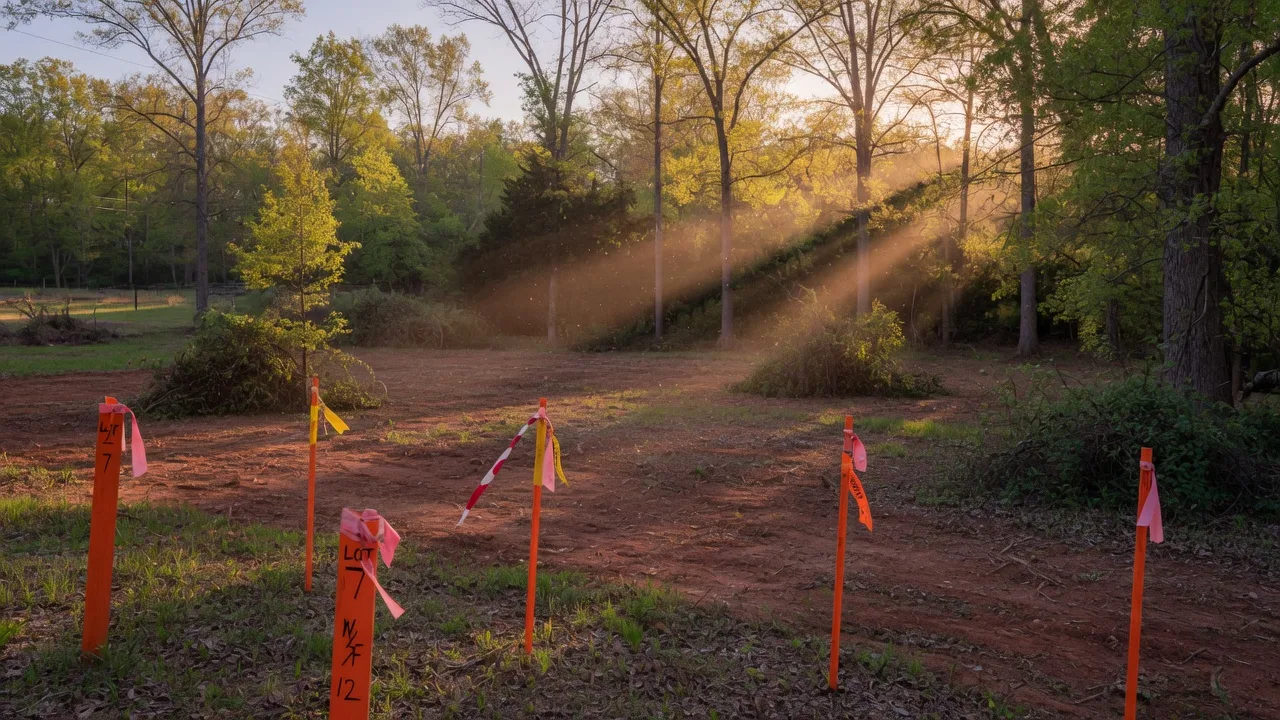
Buying vacant land to build your dream home is one of the most rewarding paths to homeownership in Virginia. It gives you complete control over the design, location, and features of your home. But it also comes with a different set of considerations than buying a house that is already built. Zoning, utilities, access, soil conditions, and financing all work differently when the only thing on the property is trees and grass.
In Central Virginia, land is still available at reasonable prices in counties like New Kent, Hanover, Charles City, Goochland, Amelia, and Prince George. If you are looking for acreage, privacy, and room to create something exactly your own, here is everything you need to know before you start shopping for land.
Why Buy Land in Virginia?
Virginia offers a remarkable diversity of landscapes within easy reach of major employment centers. Within an hour of Richmond, you can find riverfront lots, wooded hillsides, farmland, and lakefront properties. For military families, land in New Kent provides a quiet, rural setting with a manageable commute to Fort Eustis and Langley AFB on the Peninsula. For families stationed at Fort Gregg-Adams, Prince George and Amelia offer space at prices that feel like a steal compared to other East Coast markets.
Building your own home also means you get exactly what you want -- the floor plan, the finishes, the orientation on the lot. No compromising on someone else's kitchen renovation or carpet color.
Step 1: Know What You Want in a Lot
Before you start looking at parcels, get clear on your priorities:
- Size — How many acres do you need? Two acres might feel spacious, or you might want 10 for privacy and room to roam.
- Setting — Wooded, open pasture, waterfront, or on a quiet country road? Each comes with different considerations for building.
- Location — How far are you willing to commute? School districts matter if you have children.
- Timeline — Are you ready to build now, or do you want to buy land and build in a few years? Financing and holding costs differ.
Step 2: Understand Zoning and Land Use Regulations
Every county in Virginia has its own zoning ordinances that dictate what you can build, how far the house must sit from the road, minimum lot sizes, and whether agricultural or residential uses are permitted. In New Kent, for example, there are agricultural zones where you can build a single-family home on a minimum of two acres. In Hanover, some areas require a minimum of three acres for a septic system.
Your agent should pull the county's zoning map and the specific parcel's zoning classification before you make an offer. Also check the comprehensive plan -- it tells you whether the county plans to rezone the area in the future, which could affect your property value and what you can do with the land.
Step 3: Check Utilities and Access
This is the most common hidden-cost surprise with vacant land. Before you commit:
- Water — Is public water available at the road, or will you need a well? A drilled well in Central Virginia typically costs $5,000 to $12,000 depending on depth and geology.
- Sewer — Is public sewer available, or will you need a septic system? A septic design and installation can cost $5,000 to $15,000. The property must pass a percolation test to determine whether the soil can handle a septic system.
- Electricity — How close is the nearest power connection? Running electric from the road to your building site can be expensive if the lot is deep. Get a cost estimate from the utility company before you buy.
- Access — Does the lot have legal road frontage, or does it require an easement across a neighboring property? Make sure there is a recorded, deeded right of way.
In counties like Charles City and King William, many lots do not have public water or sewer. Wells and septic systems are standard, and a percolation test should be a contingency in your purchase contract.
Step 4: Get a Survey and Soil Tests
A boundary survey is essential for any land purchase. It confirms the property lines, identifies any encroachments, and is required by most lenders and title companies. A topographical survey adds elevation data, which is useful for planning the house site, driveway, and drainage.
A soil test goes beyond the septic perc test. It tells you about soil composition, drainage, and whether the land is suitable for a foundation. In areas with heavy clay soil (common in parts of Central Virginia), you may need special foundation engineering.
Step 5: Understand the Full Cost of Building
The price of the land is just the beginning. The total cost to build includes:
- Land acquisition — Purchase price plus closing costs
- Site preparation — Clearing trees, grading, driveway installation. This can range from $10,000 to $50,000+ depending on the lot.
- Utility connections — Well, septic, electric, and possibly gas line installation.
- Permits and fees — Building permits, impact fees, and inspection costs vary by county.
- Construction costs — Typically $150 to $250+ per square foot for a custom home in Virginia, depending on finishes and complexity.
A construction loan is different from a standard mortgage. It pays out in draws as work progresses and converts to a permanent mortgage when construction is complete. You will need a lender experienced with construction-to-permanent loans.
Step 6: Work with an Agent Who Knows Land
Not every real estate agent has experience with vacant land transactions. Land sales have their own set of contract addenda, contingencies, and due diligence periods. I specialize in land and new construction in Central Virginia, and I work with families buying everything from small residential lots to larger acreage parcels in New Kent, Hanover, Charles City, Goochland, King William, Amelia, and Prince George.
I can help you identify lots that are truly buildable, connect you with surveyors, well drillers, and builders I trust, and guide you through the unique contract considerations that come with buying raw land.
Best Areas for Buying Land in Central Virginia
- New Kent County — Rolling countryside between Richmond and Williamsburg, close to I-64, popular for new construction and acreage. Commutes well to both Richmond and Peninsula bases.
- Hanover County — Excellent schools, strong rural character in the northern and eastern parts of the county, good access to I-295 and I-95.
- Charles City County — Rich in history, riverfront land along the James, very affordable per-acre prices. A quieter, more remote feel.
- Goochland County — Western Richmond suburbs with large-lot zoning, excellent schools, and a country atmosphere. Higher price points but strong resale value.
- Amelia County — South of Richmond, affordable land, rural character, growing popularity with families stationed at Fort Gregg-Adams.
- Prince George County — Close to Fort Gregg-Adams, new construction communities on larger lots, good commuter access.
Looking for land in Virginia?
I work with buyers and builders to find the right parcel for your dream home. Let us talk about what you are looking for and find some lots to explore.
Shannon Russell is a licensed Virginia Realtor specializing in land, new construction, and military relocation across Richmond, Henrico, Chesterfield, Hanover, New Kent, Charles City, Goochland, King William, Amelia, Prince George, and all surrounding Virginia communities.