
How to Make a Winning Offer on a Virginia Home: What Richmond and Hampton Roads Buyers Need to Know

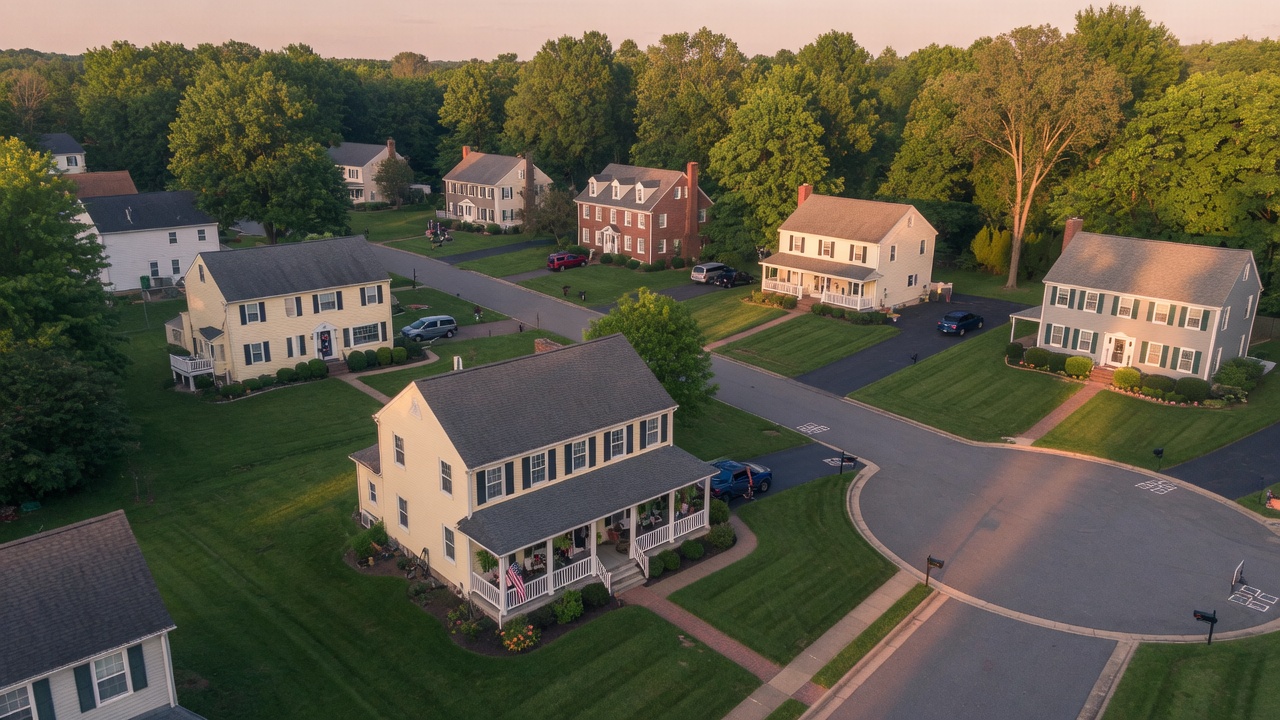
"I hear it from buyers almost every week right now: 'We found the house we love, but we are afraid we are going to lose it to someone else.' That anxiety is understandable — the Richmond and Hampton Roads markets are still moving fast, especially in Chesterfield and Henrico where desirable homes go under contract in 8 to 12 days. But here is the good news: you do not need to waive every protection or overpay to win. You need a smart strategy. In this guide, I walk you through exactly what makes an offer stand out — and how to protect yourself at every step."
— Shannon Russell, MRP
Finding the right home is the exciting part. But once you have toured the properties, compared neighborhoods, and fallen in love with a kitchen or a backyard, the real work begins: writing an offer that a seller will accept — without putting yourself at financial risk. Whether you are a first-time buyer in Mechanicsville, a military family relocating to Newport News, or a move-up buyer in Chesterfield, the principles of a strong offer in the Richmond and Hampton Roads area follow a clear playbook. Here is how to get it right.
How much earnest money should I put down in Virginia, and does it really matter?
Earnest money — also called a good-faith deposit — is the single most visible signal of seriousness you can send to a seller. In the Richmond and Hampton Roads market, the standard range is 1% to 3% of the purchase price. On a $400,000 home, that translates to $4,000 to $12,000.
Here is what matters most: the amount tells the seller that you have skin in the game. A buyer offering $2,000 earnest money on a $450,000 house in Henrico does not look nearly as committed as one offering $9,000. In a multiple-offer situation — which still happens regularly in Chesterfield and desirable Hanover neighborhoods — a higher earnest money deposit can be the differentiator that moves your offer to the top of the pile.
Shannon's Rule of Thumb
Put down the highest earnest money you are comfortable losing (temporarily) if the deal falls through for a reason not covered by your contingencies. In Virginia, your earnest money is held in escrow by the title company or attorney and is applied toward your closing costs or down payment at settlement. You do not forfeit it unless you default on the contract.
Which contingencies protect me, and which ones can I flex on?
Contingencies are the safety nets built into your purchase contract. They let you back out of the deal — and keep your earnest money — if specific conditions are not met. In Virginia, the most common contingencies include:
Home Inspection Contingency
This is the one I almost never recommend waiving. A professional home inspection in Virginia typically costs between $300 and $500 depending on the size and age of the property. It protects you from discovering a failing HVAC system, termite damage, foundation issues, or a roof that needs replacing — problems that are common in Virginia's humid climate. A well-written inspection contingency gives you the right to negotiate repairs, request a credit, or walk away entirely. In most Richmond-area transactions, the inspection period runs 7 to 14 days from ratification.
Appraisal Contingency
If you are financing your purchase — whether with a VA loan, FHA, or conventional mortgage — your lender will require an independent appraisal to confirm the home's value supports the loan amount. The appraisal contingency lets you renegotiate or walk away if the home appraises for less than your offer price. In a competitive market, some buyers choose to cover part or all of an appraisal gap with their own funds, but this is a calculated risk that depends entirely on your financial cushion. I always counsel buyers to understand exactly what they are committing to before agreeing to an appraisal gap coverage clause.
Financing Contingency
Even if you have a pre-approval letter in hand, a financing contingency protects you if your loan falls through for reasons beyond your control — such as a change in employment, a DTI ratio issue, or lender underwriting delays. For VA and FHA buyers, this contingency is virtually standard. For cash buyers, it is obviously not applicable, and a cash offer without a financing contingency is one of the strongest positions you can hold in a multiple-offer scenario.
Home Sale Contingency
If you need to sell your current home before buying a new one, a home sale contingency ties the two transactions together. This is the contingency that sellers dislike the most — and in a competitive Richmond or Chesterfield market, it can put your offer at a significant disadvantage. If you have flexibility, consider selling first, renting temporarily, and then buying without this contingency. It transforms your offer from conditional to clean.
How do I make a VA loan offer competitive against conventional buyers?
This is one of the most common questions I get from military families, and the answer may surprise you: VA loan offers can absolutely compete head-to-head with conventional and cash offers. The key is understanding the myths and presenting your offer professionally.
Many sellers still carry outdated beliefs that VA loans take longer to close, require excessive repairs, or are more likely to fall through. The data does not support those concerns. According to the Virginia Association of Realtors, VA loan closing timelines in the Commonwealth are comparable to conventional financing — typically 30 to 45 days from ratification. A well-prepared VA buyer with a strong pre-approval letter and an experienced agent behind the offer is just as reliable as any other buyer.
The real competitive edge comes from preparation. When I write a VA offer for a military buyer, I make sure the pre-approval letter is solid, the earnest money is strong, and the contract language is clean. A well-crafted VA offer with a confident agent behind it is one of the strongest you can present.
What are typical closing costs for Virginia home buyers, and can I negotiate them?
Closing costs are the fees and expenses paid at settlement in addition to your down payment. In Virginia, buyer closing costs typically fall in the range of 2% to 5% of the purchase price. On a $400,000 home, that means budgeting roughly $8,000 to $20,000 above your down payment. Here is a breakdown of what goes into that number:
Lender Fees
- • Loan origination fee
- • Credit report & underwriting
- • Flood certification
- • Prepaid interest (daily interest to month end)
- • Discount points (optional)
Title & Government Fees
- • Title search and title insurance
- • Recording fees
- • Virginia grantor's tax
- • State excise tax ($0.25 per $100 of sale price)
- • Survey fee (if required)
Escrow & Insurance
- • Homeowners insurance (first year premium)
- • Property tax escrow reserves (typically 2–6 months)
- • Flood insurance (if in a flood zone)
- • HOA transfer fees (if applicable)
VA-Specific Costs
- • VA funding fee (1.25%–3.3%, can be financed)
- • VA appraisal fee (~$500–$600)
- • No attorney fee required (VA does not mandate one)
- • No PMI — saves hundreds monthly
One of the most powerful negotiation tools in Virginia real estate is the seller concession. In many transactions, buyers can negotiate for the seller to contribute a portion of the closing costs — sometimes up to 3% to 6% of the purchase price depending on the loan type and your down payment percentage. For VA buyers, the VA allows sellers to contribute up to 4% toward buyer closing costs and concessions. A strong offer that asks for a reasonable seller concession — rather than demanding a lower purchase price — can benefit both parties by keeping the appraised value clean while reducing your cash-to-close.
When should I use an escalation clause, and when is it a mistake?
An escalation clause is a provision in your offer that automatically increases your bid above competing offers, up to a specified maximum. In Virginia — where escalation clauses are widely used and accepted — they can be an effective tool in competitive neighborhoods like Chesterfield's top school zones or Henrico's Near West End.
Here is how it works in practice: You offer $410,000 on a home listed at $400,000, with an escalation clause that raises your bid by $2,500 above any competing offer, up to a ceiling of $430,000. The seller must present proof of the competing offer to trigger the escalation.
An escalation clause makes sense when:
- You know the property is getting multiple offers (your agent confirms through the listing agent).
- You have a firm financial ceiling and do not want to get caught up in emotional overbidding.
- The home has been on the market for a short time and shows strong demand indicators.
It is a mistake when:
- The property has been sitting on the market for 20+ days — there may not be competition to escalate against.
- You are already stretching to your pre-approval limit — the escalation could push you beyond what the home appraises for.
- The home's condition is uncertain and you have not yet completed your inspection.
What are the most overlooked strategies for standing out as a buyer?
Beyond price and contingencies, there are several less obvious moves that can make your offer more attractive to a seller in the Richmond and Hampton Roads market:
Get a Strong Pre-Approval, Not Just Pre-Qualification
A pre-qualification letter says a lender thinks you might qualify. A full pre-approval letter says the lender has verified your income, assets, credit, and employment and is committed to funding your loan up to a specific amount. In a multiple-offer situation, a pre-approval letter carries dramatically more weight.
Be Flexible on the Closing Date
Sellers often have their own timeline pressures — a pending job relocation, a lease ending, or a new construction completion date. Asking the seller what closing date works best for them, rather than demanding your preferred date, is a low-cost concession that can make your offer stand out. If you are a military buyer with a report date, be upfront about your timeline and let the seller see that you are organized and serious.
Write a Personal Letter (When Appropriate)
In Virginia, personal letters to sellers are allowed and can be meaningful — especially for sellers who have lived in and loved their home. A brief, genuine note about why you love the house, the neighborhood, and the community can create an emotional connection that tips the scales. That said, Fair Housing laws prohibit any mention of protected classes, so keep the letter focused on the property itself.
Limit Unusual Requests
Every extra ask — personal property inclusion, specific repair demands, extended inspection windows — adds friction to the deal. Keep your offer clean and focused. If you need the seller to include the washer and dryer, mention it once. Do not stack additional demands that signal a difficult transaction ahead.
What are the biggest mistakes buyers make when writing an offer in this market?
After guiding hundreds of families through the buying process in the Richmond and Hampton Roads area, I see the same mistakes trip up buyers again and again. Here are the ones that cost the most:
Ready to make your move in the Richmond and Hampton Roads market?
Whether you are a first-time buyer looking at homes in Mechanicsville and New Kent, a military family relocating to Fort Gregg-Adams or Joint Base Langley-Eustis, or a move-up buyer targeting Chesterfield or Henrico's top school zones, I am here to guide you from your first showing to your closing day.
The strategies in this guide are the same ones I use every day to help my clients win homes they love — without overpaying or taking unnecessary risks. Every offer is different, and every negotiation is personal. That is exactly why working with an experienced, local agent who understands this market block by block matters so much.
Call me today at 804-803-1080 or reach out through my website for a no-obligation consultation. I will help you understand what your budget can buy, which neighborhoods fit your family best, and how to write an offer that gets you to the closing table with confidence.
Schedule Your Free Buyer Consultation
Personalized guidance on your budget, neighborhoods, loan options, and negotiation strategy. No pressure — just honest, local expertise.
Shannon Russell
Military Relocation Professional (MRP) & Realtor®
Shannon helps military families, first-time home buyers, and local Virginia sellers navigate real estate transitions with clarity and confidence. Reach out directly for a personalized buying strategy.
Call Shannon today at (804) 803-1080 or click "Get in Touch"
Ready to find your next home in Virginia?
Whether you are buying your first home or your fifth, I provide the local expertise, military relocation knowledge, and personal attention you deserve.