
PCSing in Winter: What Military Families Should Know About a Cold-Season Move to Virginia

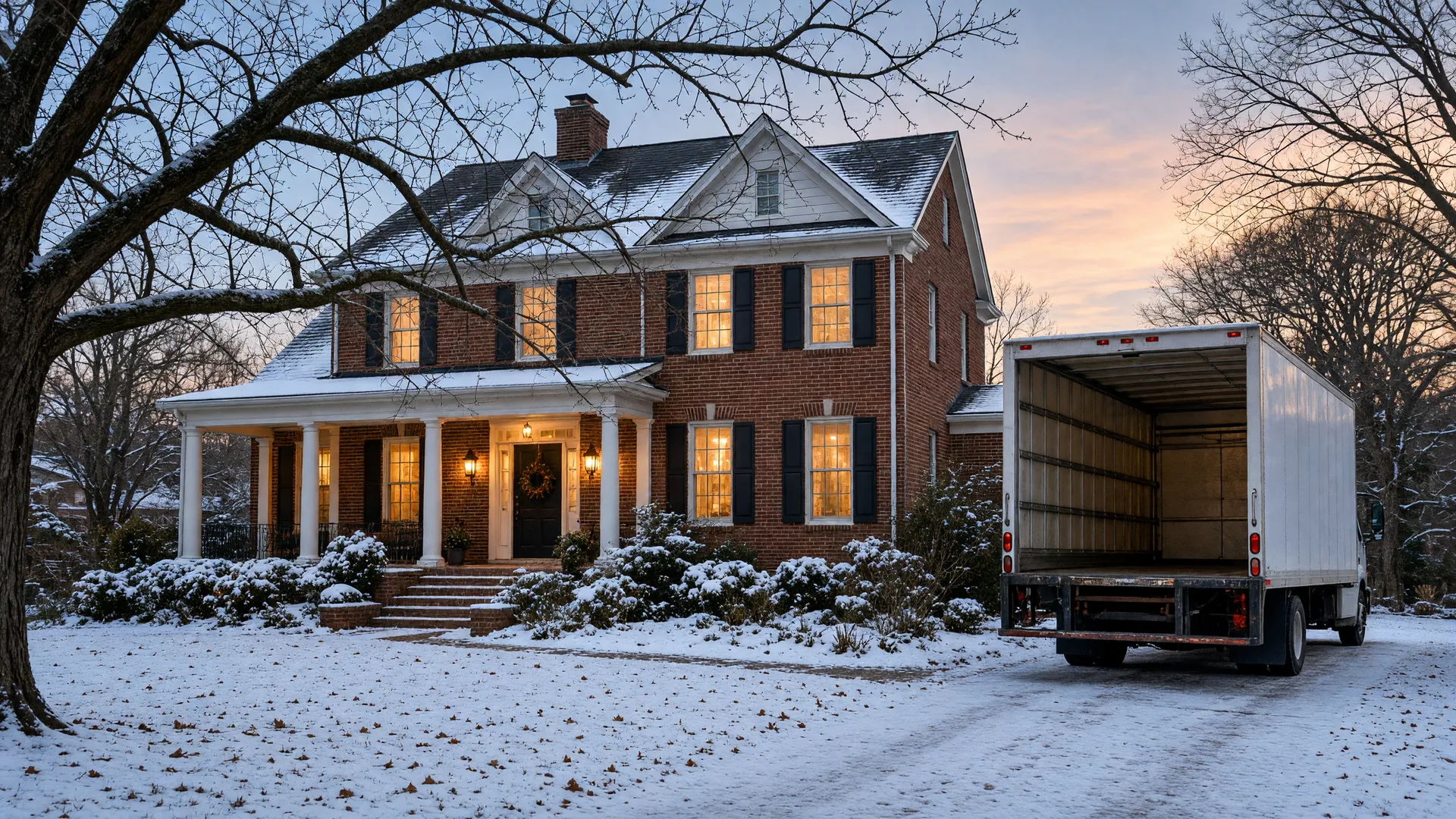
"A winter PCS is completely doable when you plan around it instead of against it. The families I work with who move between Thanksgiving and March succeed because they start earlier, lock in their financing before the holidays slow everyone down, and settle the commute question first: which side of the water is your unit on? As a Military Relocation Professional and a Navy veteran's wife, I know how much weight a move like this carries for your family, and my job is to make the housing piece feel calm and clear. This guide walks you through the timing, the neighborhoods, and the winter-specific details that make the difference."
Shannon Russell, MRP
What does a winter PCS to Virginia actually take? This guide covers the pieces that matter most for a cold-season move: a realistic timeline that threads through the holidays, the one geography rule that protects your family's quality of life for the whole assignment, getting pre-approved with a VA-experienced lender before year-end, what a winter home tour really teaches you, and how to build weather buffers into moving day. Follow these and your family will arrive settled instead of scrambling.
Virginia winters are milder than New England, but they still bring overnight freezes, the occasional ice event, and the rare big snow. The good news: winter is also the quietest time on the real estate calendar. Less competition, more negotiable sellers, and homes that are candid about their heating bills and weather sealing. For many military families assigned to Virginia between now and spring, it is the smartest window of the year to buy, as long as the plan comes together before the calendar fills with school concerts and holiday travel.
Start Before the Holidays: The Winter PCS Timeline
The summer PCS season gets all the attention, but winter reassignments, stabilization moves, and end-of-fiscal-year orders arrive every year. The timeline math is the same as any other season, with one twist: the last two weeks of December put lenders, appraisers, title offices, and moving companies on holiday schedules. Work backward from your report date and give yourself 60 to 90 days if you can. That slot between receiving orders and the holiday slowdown is where good winter moves are won.
Know Your Report Date First
Everything else hangs off your report date. If you report in January, your home search, your closing date, and your moving window all need to finish before the first week of January or stretch carefully into the new year. Write the report date at the top of a page and build every milestone backward: closing, inspections, appraisal, underwriting, moving day, and arrival. The families who write it down are the families who do not end up in temporary lodging through the holidays by accident.
Use the Holiday Slowdown, Do Not Fight It
Many title companies and lender processing teams run lean between Christmas and New Year's. That is not a reason to panic; it is a reason to schedule your closing before the 20th of December or after the 3rd of January, and to confirm with your lender exactly which days their processing desks will be dark. A closing that aligns with your lease end or your housing allowance start date is worth planning a month in advance.
If You Cannot Visit, We Can Still Make It Work
A winter assignment sometimes arrives with little notice and no time for a site visit. I have helped military families buy sight-unseen in every season, using video walkthroughs, virtual tours, and detailed questions on our side so nothing important is left to chance. For a winter purchase we add two extra steps: a full inspection that covers heating and weather-sealing, and photos or video of the home on a cold morning so you see how it actually performs. It takes trust on both sides, and it works when we stay in close contact.
The First Question: Which Side of the Water Is Your Unit On?
This is the single most important decision of a Virginia PCS, and it matters in winter exactly as much as it does in July. Virginia's military bases split across two bodies of water, and the only vehicle crossings between the Peninsula and the Southside are the Hampton Roads Bridge-Tunnel (HRBT) and the Monitor-Merrimac Memorial Bridge-Tunnel (MMMBT). Commuting across either one daily adds 45 to 90 minutes to your day in good weather, and ice, wind, and tunnel closures make it worse in winter. The rule I give every military buyer is simple: live on the same side of the water as your gate.
Peninsula-Side Bases: Stay on the Peninsula
If your orders send you to Fort Eustis, Langley Air Force Base, Naval Weapons Station Yorktown, or the Newport News Shipyard, your home search belongs on the Peninsula, or just west of it. Close to the gates, York County, Poquoson, Hampton, and Newport News put you minutes from work. If you want more space, acreage, and new construction, the western communities connect without ever touching a bridge-tunnel: New Kent, Hanover, James City County, Williamsburg, and West Point are the sweet spot, with commutes of roughly 20 to 45 minutes to Fort Eustis depending on which town you choose, and no water crossing in your daily drive.
Southside Bases: Live on the Southside
If your orders are to JEB Little Creek-Fort Story, Naval Station Norfolk, NAS Oceana, or the Norfolk Naval Shipyard, your family should live on the Southside: Norfolk, Virginia Beach, Chesapeake, Portsmouth, or Suffolk. Peninsula communities look lovely on a map, but crossing the HRBT or MMMBT twice a day becomes a quality-of-life test that no view of a listing photo can justify. The right Southside neighborhood puts you close to the gate with schools, base services, and the beach within reach, and it keeps your commute sane in every season. I cover each installation in detail in my Military Base Neighborhood Guide, and the same principle applies in winter: same side of the water, every time. Your future self, sitting in rush hour on an icy February Tuesday, will thank you.
For a full base-by-base walkthrough of neighborhoods, schools, and commute math, see my Langley and Fort Eustis guide and my Southside Norfolk and Virginia Beach guide.
Get Pre-Approved Before the Holidays
Winter buyers who close quickly are the buyers who arrived pre-approved. With the holiday slowdown on the calendar, start the pre-approval conversation early, before mid-December if at all possible. A VA loan pre-approval can often be completed in a couple of business days, but underwriting, appraisal scheduling, and rate locks all move slower in the last two weeks of December, so the earlier your file is complete, the sooner everything else can happen.
Work with a lender who specializes in military buyers. They understand deployment income, BAH calculations, and the paperwork rhythm of an active-duty file, and in a market where good homes still attract multiple offers, a clean, pre-approved file with a VA-experienced lender makes your offer competitive rather than complicated. If you think you may be reassigned in two or three years, we can also talk honestly about whether buying or renting makes more sense for your specific timeline. More detail lives in my VA loan guide for military families.
What a Cold-Day Home Tour Teaches You
Winter is the most honest season to shop for a home. A house can hide a lot in June. In January, it tells you the truth.
- Tour in daylight. Winter sun sets early, so schedule showings for morning or early afternoon and see the rooms in real light. Ask about the tree line, too: a bare winter yard shows you exactly how much sun the rooms will get all year.
- Watch how the house holds heat. Feel for drafts at windows and doors, note whether rooms near the furnace stay comfortable while the far rooms lag, and ask for typical winter utility bills without rounding up. A cozy A-frame with baseboard heat can surprise you in February.
- Check the systems under load. The furnace, water heater, and well pump all get their real workout in winter. A professional home inspection covers heating and cooling operation, so do not skip it, especially on a sight-unseen purchase.
- Look at the driveway and yard. A steep driveway can be a real headache with Virginia ice, and low, poorly drained spots show up best in cold, wet weather. Cracks and standing frost problems today are expensive fixes later.
- Ask about the roof and gutters. Winter storms reveal roof and gutter weaknesses fast. An inspection will flag visible issues, and knowing what you inherit means no surprises after the first ice event.
I walk buyers through every one of these checks on every tour, and I build them into the offer strategy. In winter, a smart buyer uses the season, not just the listing photos.
Moving Day in Cold Weather: Build Your Contingency Plan
Winter moving is mostly a planning exercise. A little weather awareness turns a stressful day into a smooth one.
- Book your mover early. Professional movers keep busy through the holidays, and short-notice availability drops fast. Lock your dates early, and know the company's policy for weather cancellations so you are not fighting a contract AND a snowstorm.
- Pick a backup moving day. Even in Virginia, an ice event can close roads for a day. Decide with your movers in advance which days are viable alternates, and keep the report-date deadline in view.
- Arrange temporary housing as a plan B. On-base lodging and extended-stay hotels can be full around the holidays, so book as early as you can. If your goods are delayed, you want a warm backup room, not a search during a winter storm.
- Have utilities connected before you arrive. Heat, water, and power should be on in your name a day or two before closing day. There is no worse welcome to a new home than a cold house with no heat because the service transfer was scheduled for next week.
- Pack a first-night bag that survives the truck. Keep it in your car, not the moving truck: medications, chargers, toiletries, a change of clothes for everyone, a flashlight, and bottled water, so a delayed truck does not mean a rough night.
Virginia winter weather is usually a few cold, rainy days with an occasional snow event, not a months-long siege. Plan for the worst, enjoy the calm, and keep the move on schedule around the weather windows.
Schools and Holiday Breaks: The Mid-Year Enrollment Window
A winter move lands your children in a new district mid-year, which is a very normal thing in military families. The good news is that the school liaison programs at every major Virginia installation are built for exactly this moment. They help with registration, mid-year enrollment, special education coordination, and connecting you to the right district office before you even arrive.
Timing matters: enroll as soon as you know your move-in date, because some districts need a few days to process records and assign the school bus route. If your move straddles the holiday break, use the quiet week to get paperwork in order and let your kids visit the new school building early if the office will allow it. A little familiarity before the first January morning makes a big difference. For the neighborhood-school specifics across the region, my base neighborhood guide goes street by street.
A Family Checklist for a Winter Move
- Write down your report date and work backward through closing, inspections, and moving day.
- Confirm which side of the water your unit is on, then search only that side. Peninsula bases pair with New Kent, Hanover, James City, Williamsburg, West Point, and the Peninsula; Southside bases pair with Southside living.
- Get pre-approved with a VA-experienced lender before the holiday slowdown.
- Schedule your closing before December 20 or after January 3 if you can.
- Book the mover and a temporary-housing backup as early as your orders allow.
- Connect utilities before arrival and pack a first-night bag that stays in the car.
- Contact the school liaison early, even if the move is weeks out.
- Keep a winter emergency kit in the car: blanket, ice scraper, flashlight, and bottled water.
- Plan one family celebration in the new home. Even a simple first dinner makes the new place feel like home before the holidays begin.
Winter relocation is proof that military families can do hard things, especially with the right partner. The families I have helped move between Thanksgiving and March arrive rested because the plan was settled before the stress had a chance to arrive. You can too.
Planning a Winter PCS to Virginia?
I help military families find the right home on the right side of the water, on a timeline that works around the holidays. Let us set up a virtual tour before you arrive, so you can hit the ground running.