
Accessory Dwelling Units in Virginia: What Buyers, Builders and Homeowners Should Know in 2026

"I get more questions about accessory dwelling units than almost any other topic right now. It makes sense. Families are looking for ways to keep aging parents close, give grown kids their own space, or make a home work harder. Whether you are buying, building, or just curious about what is possible on your lot, I want you to understand how ADUs work in Virginia, why the rules are changing, and what to ask before you start."
Shannon Russell, MRP
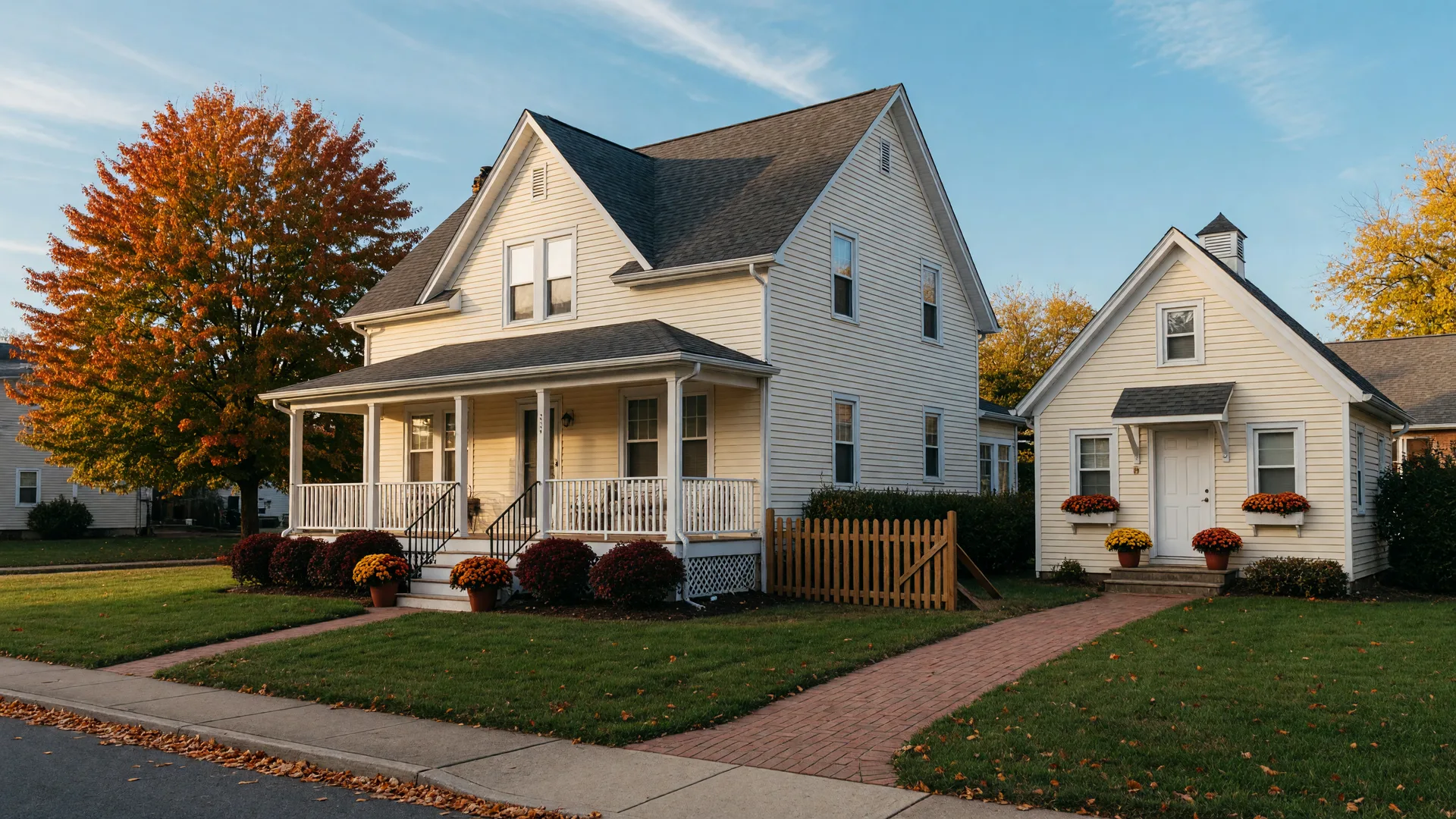
An accessory dwelling unit, or ADU, is a second living unit on a single-family residential lot. It can be attached to the main house or detached in the backyard, and it has its own kitchen, bathroom, and sleeping area, plus a separate entrance. You have probably heard them called granny flats, in-law suites, backyard cottages, or carriage houses. In Virginia, they are one of the fastest-growing topics in residential real estate, and the rules around them are changing in a big way on July 1, 2027.
This guide covers what an ADU is, why they are growing in popularity, how local rules differ across the communities I serve from New Kent and Henrico to Richmond and Williamsburg, what New Kent County has already done, what the new state law means, and the practical questions every buyer and homeowner should think through before building one.
What Is an Accessory Dwelling Unit?
An ADU is a complete, self-contained living space on the same lot as a single-family home. The key word is complete: it has its own kitchen, its own bathroom, and its own sleeping area, so someone can live there independently without sharing any rooms with the main house. It also has its own entrance, either from the side of the main house or directly from the backyard for a detached unit.
ADUs come in a few common forms:
- Attached ADU. Built onto or converted within the main house, such as a finished basement with a kitchen, a converted garage, or an addition with a separate entrance.
- Detached ADU. A freestanding building in the yard, often a converted garage, a small new cottage, or an old shop or barn given new life as a living space.
- Internal conversion. An underused part of the existing home, like an upstairs suite or an attached sunroom, turned into an independent unit.
No matter what you call it, a granny flat, an in-law suite, a backyard cottage, or a carriage house, the idea is the same: more flexible living space on a lot that already has a home on it.
Why Are ADUs Growing in Popularity?
The reasons families are drawn to ADUs are as varied as the families themselves. In my work across Central Virginia and Hampton Roads, I hear the same handful of motivations again and again:
- Multi-generational living. More families want grandparents, adult children, or other relatives close by, with the privacy of their own front door. An ADU gives everyone space to breathe while staying under one roof, in the best sense of the phrase.
- Rental income. A well-planned ADU can be rented out to help with the mortgage, cover property taxes, or simply turn an underused garage into an income-producing part of the property. For military families who deploy or PCS, a rented ADU can keep the home producing income while they are away.
- Home offices and studios. With more people working from home, a quiet, separate space with its own door is a luxury many buyers now put near the top of their list.
- Aging parents. An accessible, ground-floor unit can let a parent live with dignity and independence nearby, instead of in a facility or across town.
Buyers are also starting to ask about ADU potential before they make an offer, because a lot that can accommodate a second unit is worth more to them than one that cannot. That is a conversation I have every week now.
There Is No One-Size-Fits-All ADU Rule in Virginia
Here is the most important thing to understand: Virginia does not have a single statewide rule for ADUs today. Instead, ADU rules are set locally, by each county, city, and town. That means a property in New Kent can have different requirements than a property in Henrico, and a lot in the City of Richmond can be treated very differently than one in Williamsburg.
The differences can show up in almost every part of the process: whether an ADU is allowed at all on your lot, how large the unit may be, how close it must sit to the property line, whether parking is required, whether the unit must be occupied by family members, and what permits you need. One locality may welcome a detached backyard cottage while a neighboring one still restricts ADUs to attached conversions. That is why working with an agent who knows each locality matters. I have walked enough permits and enough neighborhoods to know it is rarely a simple yes or no answer, and the right starting point is your specific address, not a general rule.
How New Kent County Handles ADUs Today
New Kent County is one of the communities I know best, and it has been steadily building out its ADU framework. Today, the county's approach centers on the zoning permit process, with family-occupancy and parking considerations built into the review. In plain terms, New Kent wants to know who will live in the unit and where the cars will go, alongside the usual questions about lot size and setbacks.
In 2025, the county updated its ordinances in ways that matter for anyone thinking about an ADU. The updates formally define accessory dwelling units within the county code and adjust the limits on accessory structures, which gives homeowners clearer ground rules than the county had before. Even with those updates in place, every project still goes through the county's permitting process, and the specifics can depend on your zoning district, your lot, and your site conditions.
If you are looking at New Kent with an ADU in mind, the smartest early step is a conversation with the county's zoning staff, backed up by someone local who has been through the process.
The Big Change Coming July 1, 2027: The New State Law
While local rules drive today's decisions, a significant statewide change is on the way. Code of Virginia Section 15.2-2292.4, effective July 1, 2027, will reshape how ADUs are treated across the Commonwealth. Here is what the law will do:
- ADUs allowed by right. Localities will be required to allow accessory dwelling units by right in single-family residential districts, when the unit meets size, setback, and design standards set out in the locality's ordinance. "By right" means the use itself is allowed, so long as the unit complies with those standards, rather than requiring a special-use approval.
- Building code and independent living. Units must comply with the Uniform Statewide Building Code and must have complete independent living facilities: their own kitchen, bath, and sleeping area, just like the definition of a true ADU.
- A cap on permit fees. The locality's ADU permit fee will be capped at $500, so the permit itself should not become a financial barrier.
- Safety rules still apply. Localities can still require compliance with water, sewer, septic, stormwater, flood zone, and emergency access rules. An ADU never gets a pass on the systems that keep people safe.
This is genuinely good news for homeowners who want flexibility, and for buyers who want to know a house can grow with their family. But July 1, 2027 is not here yet, and between now and then, local rules remain the law of the land. Even after the law takes effect, local ordinances will still shape the details, so the address-specific conversation stays essential.
Heads up: Laws and local rules change, and legislation can be amended before it takes effect. Before you commit to a project, verify the current requirements for your exact property with your county or city planning and zoning office, and work with a professional who has recent, local experience.
How Big Can an ADU Be?
The short answer: it depends on your locality. Across Virginia, typical ADU sizes run from about 250 square feet, think a comfortable studio, up to roughly 1,200 square feet, think a full one- or two-bedroom apartment. Local ordinances set the maximum, and sometimes the minimum, so a unit that is perfectly legal in one county can exceed the limit in the next one over.
Size is also tied to the lot itself. Setbacks, building coverage, and impervious surface limits can all influence how large a detached unit you can realistically fit, no matter what the ordinance allows on paper. When I help a buyer evaluate a property for ADU potential, I always look at the lot as much as the code.
What to Think Through Before You Build an ADU
A successful ADU project is planned on paper long before the first shovel hits the ground. Here are the practical questions I encourage every homeowner to work through:
- Well and septic capacity. If your property uses a well and septic system, the new unit's water and wastewater needs have to fit within the system's capacity. Your local health department reviews this, so have the conversation early and budget for a system upgrade if one is needed.
- Parking. Where will the extra car go? Many localities, New Kent included, factor parking into the review, and a unit that works on paper can stumble over a driveway that does not.
- Setbacks. Every lot has rules about how close structures can sit to property lines, and a detached ADU is a structure. Check setbacks for the main house and the accessory unit before you fall in love with a floor plan.
- Financing. ADUs are typically financed a few different ways: a home equity loan or line of credit, a cash-out refinance, a construction loan, or in some cases a specialized renovation loan. Talk to a lender who understands Virginia construction lending before you start pricing materials.
- Talk to the zoning office early. This is the single best piece of advice I can give. A 15-minute call or visit to planning and zoning can save you months of frustration. Bring your address, your lot size, and your idea, and let them tell you what is possible.
You should also consider utilities and access, insurance, and how the unit will be used, because each of those can change the project's cost and complexity. None of these are reasons to avoid an ADU. They are simply the questions that turn an exciting idea into a buildable plan.
Frequently Asked Questions About ADUs in Virginia
What qualifies as an accessory dwelling unit in Virginia?
An ADU is a second complete living unit on a single-family residential lot, attached or detached, with its own kitchen, bathroom, and sleeping area, plus its own entrance. They are also called granny flats, in-law suites, backyard cottages, and carriage houses. The exact definition, size limits, and requirements are set by each locality, so your county or city ordinance is the place to confirm what qualifies on your property.
Do I need a permit to build an ADU in Virginia?
Yes. ADUs are built through a permitting process, and the type of approval depends on your locality. In New Kent County, for example, the approach centers on a zoning permit with family-occupancy and parking considerations. Once the 2027 state law takes effect, ADU permit fees will be capped at $500, but building permits and local review requirements will still apply. Check with your local zoning and building departments early.
Can I rent out an ADU?
Often yes, but the rules are local. Some localities allow long-term rentals of ADUs, while others place limits on who may occupy the unit, and short-term rental rules can differ from long-term ones. If your property is in a homeowners association, also review the covenants, because they can set their own restrictions. Confirm rental rules with your locality and your HOA before you count on the income.
How big can an ADU be in Virginia?
Typical ADU sizes across Virginia range from about 250 square feet up to around 1,200 square feet, depending on the locality. Your local ordinance sets the maximum size, and your lot's setbacks, building coverage, and other site rules affect what will actually fit. Always confirm the size limits for your specific address.
What does the 2027 Virginia ADU law change?
Code of Virginia Section 15.2-2292.4, effective July 1, 2027, requires localities to allow ADUs by right in single-family residential districts when units meet size, setback, and design standards. Units must comply with the Uniform Statewide Building Code and have complete independent living facilities, the locality's ADU permit fee is capped at $500, and water, sewer, septic, stormwater, flood zone, and emergency access rules still apply. Local ordinances will still shape the details after the law takes effect.
Can I build an ADU on a property with a well and septic?
It is possible, but the system has to have the capacity to serve the additional unit. Your local health department reviews well and septic capacity as part of the process, and in rural areas like parts of New Kent, Charles City, and King William, this is often the deciding factor for a project. Have a professional evaluate capacity early, and budget for an upgrade if the system needs one.
One last note before you go: laws and local rules change. The details in this guide reflect what I know as of late 2026, and both the state law and local ordinances can shift before you break ground. Always verify the current requirements with your county or city, and lean on professionals who work with those rules every day.
And here is my soft pitch, because I mean it: whether you are a buyer who wants to know if a property can grow an ADU, a seller who wants to show off a property's flexibility, or a homeowner with a garage that is begging for a better purpose, I would love to help you think it through. The communities where ADUs make the most sense, places like New Kent, Henrico, Hanover, Charles City, and pockets of Richmond and Williamsburg, are exactly where I work every day. If you are curious what is possible on a specific property, reach out and we will start with your address.
Shannon Russell
Military Relocation Professional (MRP) & Realtor®
Shannon helps military families, first-time home buyers, and Virginia sellers navigate real estate with clarity and confidence. She specializes in land and new construction across Central Virginia and Hampton Roads, from New Kent and Charles City to Henrico, Hanover, and Richmond.
Call Shannon today (804) 803-1080 or click "Get in Touch"
Explore More Building & Land Guides
ADUs in Virginia: The Complete Guide
An evergreen resource on ADU rules, the 2027 state law, sizes, and financing.
Buying Land in Virginia
Zoning, surveys, utilities, and financing for buyers and builders.
Where to Start Building
From deciding to build to choosing a builder, step by step.
New Construction Services
Builder selection, contract review, design center support, and walkthroughs.
Thinking about an ADU in Virginia? Let's talk.
From evaluating a lot's ADU potential to buying land, building new construction, or selling a home with flexible living space, I am here to help you make an informed, confident decision.